Tunasim sensors make farm conditions visible across soil, air, light, and moisture, then carry that signal into the records behind daily decisions.
The sensing layer gives the farm three connected functions:

Live capture
Field readings are collected from the growing zone and kept close to the crop record.

Connected records
Sensor signals support harvest, irrigation, and task evidence inside the Care workflow.

Operational clarity
Teams can see what changed, where it changed, and what needs attention next.
Sensor stack
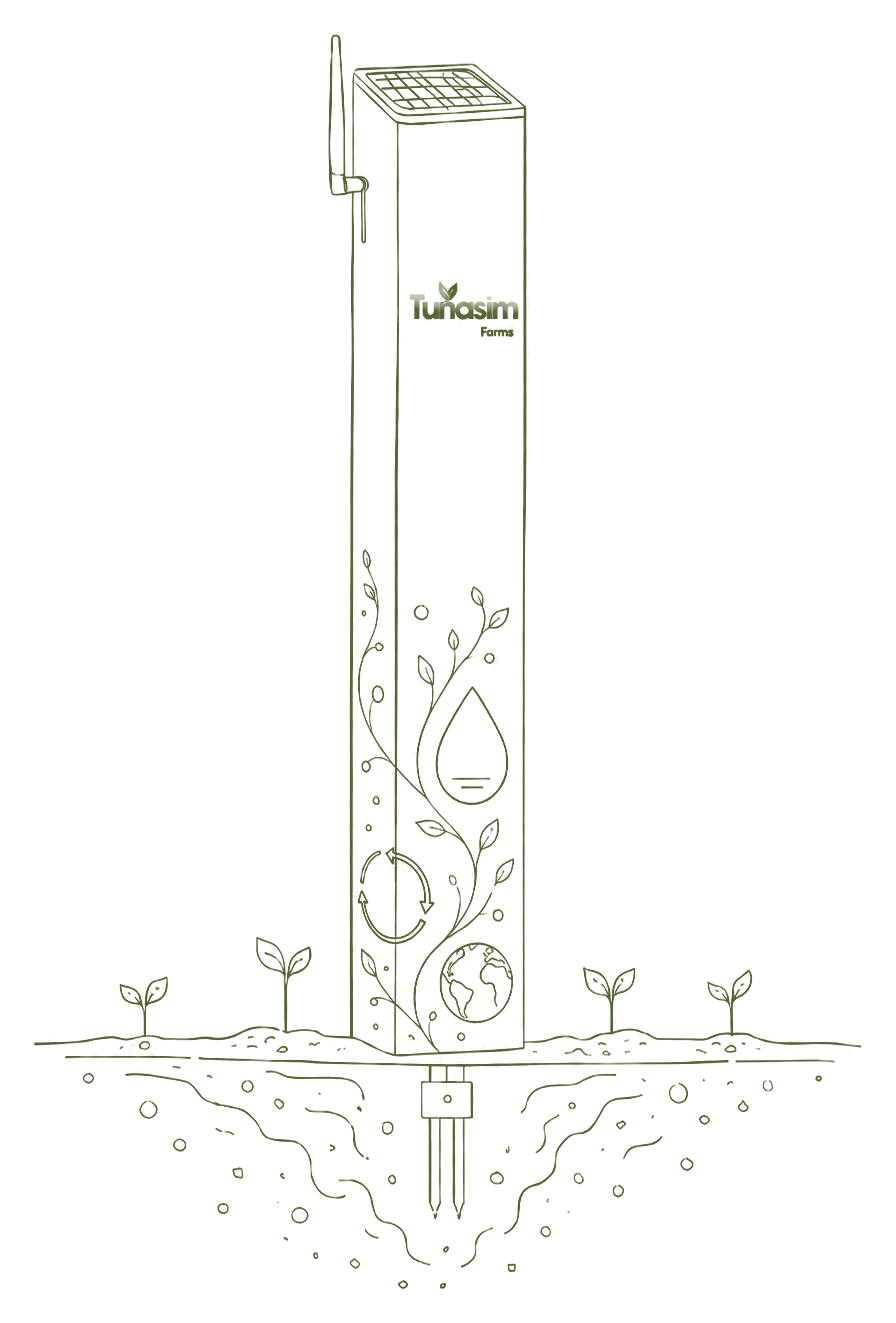
A simple sensing layer sits between the crop and TunasimCare: a field gateway, crop-zone probes, and environmental readings that keep conditions tied to the farm record.
Keeps readings moving
Connects field conditions to TunasimCare so the farm record stays current.
Shows site health
Helps the team know whether the sensing layer is active and reporting.
Supports the record
Gives daily farm activity a clearer link to the conditions around the crop.
Root-zone visibility
Shows how the growing zone is behaving beneath the crop.
Irrigation timing
Helps water and fertigation decisions respond to field reality.
Crop context
Keeps soil condition trends close to crop work, inspections, and harvest evidence.
Growing climate
Captures the conditions surrounding the crop during the growing day.
Stress signals
Helps the team spot patterns that can affect quality, timing, and crop pressure.
Decision support
Turns environmental change into something the team can compare against farm activity.
How readings move
Each reading follows a clear route from the field into TunasimCare, where the team reviews it in the context of the crop and the work already completed.
Field sensing
Devices read the conditions around the crop instead of relying only on manual checks. Soil, light, and air data are captured in the same place the crop is managed.
Data relay
Field readings move into TunasimCare so they can sit beside tasks, batches, and field notes. The team sees one connected record instead of another screen to manage.
Team review
TunasimCare can surface a change as a suggested check, alert, or task. The team weighs it against the crop, the field, and the moment before deciding what happens next.
Live conditions
Root-zone and canopy conditions sit beside the farm work they inform. The table shows the readings used in daily review.
Field sensor feed
Root zone
At set intervals
Moisture, temperature, EC, and NPK trends
Shows the condition around the crop before irrigation, fertigation, or inspection decisions.
Canopy climate
During the growing day
Air temperature, humidity, and light levels
Connects field conditions to stress, disease pressure, and work timing.
Data confidence
The sensing layer is useful when each reading carries enough context for the farm team to trust where it came from, how fresh it is, and what record it can support.
- Device identity, farm area, signal freshness, and battery state remain visible.
- Manual observations can sit beside sensor readings when conditions need context.
- Alerts and evidence updates can be reviewed before they become part of the record.